Down 60 and Still Showing Up: The Untold Story of Basketball's Perpetual Underdogs
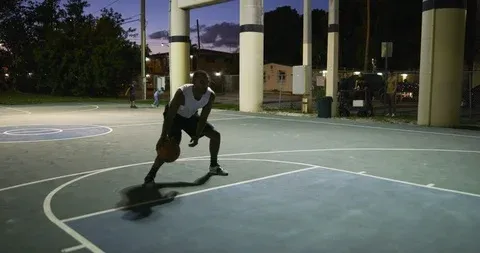
Photo: basketball player alone empty gym night practice, via images.pond5.com
Let's get one thing out of the way: if you've ever flipped on a FIBA qualifier at 2 a.m. and stumbled onto a game where the score read 94-31 at halftime, you've met the bottom of the basketball world. And chances are, you changed the channel.
That's understandable. Blowouts are hard to watch. But here at FIBAHub, we've spent an unhealthy amount of time watching them anyway, and we've come to a conclusion that might sound ridiculous: the teams getting steamrolled by 40 every window are doing more for global basketball than half the medal contenders.
The Guy Guarding an NBA Player at 6 A.M. Practice
Start with the rosters. On basketball's minnow nations — think of the lower-ranked teams scattered across Asia, Africa, and the Pacific — the guy matched up against a future NBA lottery pick probably taught middle school math on Monday. He might run a mobile phone shop. One qualifying window a few years back featured a player who reportedly flew in from a construction job to make tip-off.
These aren't pros squeezing in national team duty between shoe deals. These are amateurs with jobs, families, and bosses who don't care that a FIBA window conflicts with quarterly reviews. When they put on the jersey, they're often giving up income to do it. In the US, we romanticize the walk-on who earns a scholarship. These guys are walk-ons forever, except the stakes involve a national flag and a flight halfway around the world.
And yet they show up. Every window. Every drubbing. There's something almost absurdly admirable about it — the hoops equivalent of a rec-league softball team getting to face Clayton Kershaw and refusing to bat with eyes closed.
Keeping Morale Alive When the Scoreboard Won't
The coaching side of this might be the loneliest job in the sport. Picture the halftime speech when you're down 38. There's no adjustments that fix a talent gap that large. So the good ones — and there are genuinely good ones down there — coach the small stuff. Did we cut hard on that possession? Did we talk on defense for a full 24 seconds? Did the young point guard, the one who might anchor this team in four years, get something out of this?
That last one is the whole point, actually. Blowout losses are where the next generation gets reps they'd never get otherwise. A 19-year-old guard from a small nation isn't cracking the rotation of a top-10 team. But against a powerhouse, he gets 30 minutes against elite competition. That's a masterclass with a brutal tuition.
Why the Blowouts Actually Matter
Here's the part American fans tend to miss. Basketball's global growth doesn't happen at the top of the pyramid — it happens at the base. Every national federation that fields a team, no matter how outgunned, keeps the sport alive in a country where it competes with soccer, cricket, or rugby for every dollar and every kid's attention. A qualifier that ends 102-44 still produces a highlight, a local news story, a reason for a 12-year-old in that country to believe the national team is theirs.
Compare that to the alternative. If FIBA only ran events for the top 16 teams, dozens of federations would lose funding, interest, and any pathway to improvement. The blowouts are the toll you pay for a genuine world game. You don't get South Sudan's Olympic debut without a decade of teams losing badly on the way up. You don't get Luka without Slovenia grinding through the lower tiers once upon a time.
The math always catches up eventually. Programs that stay in the system, that keep showing up to lose by 40, sometimes become the teams that win by 40. It's slow. It's painful. It's the least sexy story in basketball.
A Different Kind of Highlight Reel
So the next time you're doom-scrolling at 1 a.m. and land on a qualifier featuring a team you've never heard of getting dismantled, stick around for a quarter. Watch the captain barking instructions to teammates he sees twice a year. Watch the bench celebrate a made three like it won a championship — because for that night, in that building, it kind of did.
The medal games are for the history books. These games are for the future of the sport. Somebody's got to lose by 50 so somebody else can eventually learn how not to. The least we can do, as fans of this global game, is know their names.
Or at least respect the hustle of a national team whose starting shooting guard has a shift at the family store in the morning. That's a toughness the bracket leaders will never have to learn.