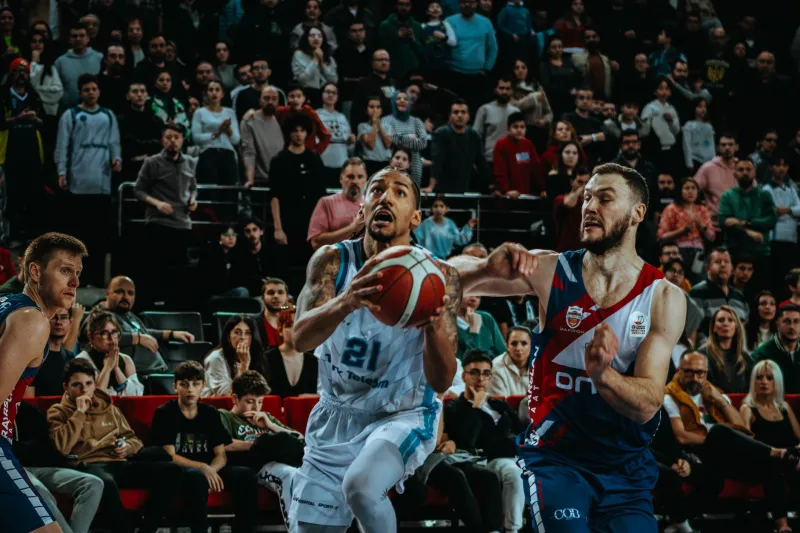
Coffee at 4 A.M.: A Survival Guide for Watching FIBA Games From American Soil

Let's be honest: nobody hands you a manual for this. You get into international basketball, you fall in love with a national team that isn't Canada or the US, and then you check the schedule and realize their next game tips off at 4:11 a.m. Eastern. Welcome to the 12-hour time zone problem.
The good news? Watching FIBA basketball from a couch in Ohio or a dorm in California is completely doable. It just requires a system. Here's the one I've cobbled together over a decade of jet-lagged viewing.
Figure Out Your Streaming Situation First
Rights in the US shift depending on the tournament, so check before each event rather than assuming. Recent FIBA windows and World Cup action have been split across platforms — some games on traditional TV, others streaming-only. Courtside 1891, FIBA's own streaming service, is the most reliable catch-all for qualifying windows and youth tournaments that American broadcasters ignore entirely.
A few practical notes:
- Check blackout quirks. Some platforms geo-block games that air on a US network, so the same matchup might be available Tuesday and locked Wednesday.
- Test your setup before a big game, not during it. Nothing stings like missing a fourth-quarter comeback because your login wasn't working.
- Consider a subscription month-to-month. If you're only following one tournament, a single month of a streaming pass beats a year-long commitment.
Build a Schedule You Can Actually Keep
Here's where most fans go wrong: they try to watch everything. A group stage in Asia might produce four games a day, every day, for a week. That's not a viewing schedule; that's a hostage situation.
Instead, treat it like a fantasy football draft. Pick your priorities:
- One must-watch team — usually the one with a player you follow or a rooting interest you've developed.
- One marquee daily game — whatever the bracket throws up that's worth losing sleep over.
- Everything else is bonus content. Highlights, box scores, and the occasional replay fill in the gaps.
If tipoff lands at 3 a.m. your time, ask whether you're watching live or treating it like a recorded game. Both are valid. Live hits different, but a 6 a.m. replay before work is a perfectly respectable compromise.
The Spoiler Problem (and How to Beat It)
Nothing wrecks a morning replay like a push notification screaming the final score. Before you commit to watching games on delay, go into lockdown mode:
- Turn off sports notifications on your phone — all of them, not just the app you think is the culprit.
- Mute keywords on X (scores, team names, player names) and on Reddit.
- Be careful with group chats. A simple "don't spoil the game, I'm watching later" message saves friendships.
- Avoid ESPN's homepage like it's a landmine until you've watched.
It feels paranoid until the first time a well-meaning buddy texts you "did you SEE that buzzer beater" at 7 a.m. Then it feels like self-defense.
Find Your People
This is the secret ingredient. Watching a qualification game against a team you can barely pronounce is fine alone. Watching it with 500 other insomniacs in a live thread? That's a whole sport.
- Reddit's basketball communities run game threads for major FIBA events, and the international hoops subs are genuinely welcoming to newcomers.
- Discord servers dedicated to national teams or international prospects have channels that light up during early-morning windows — the chatter makes a 4 a.m. tipoff feel like a watch party.
- National team fan groups on social media often share legal streams, schedule graphics in Eastern Time (a small mercy), and enough banter to keep you awake through a second-quarter lull.
The time zone thing stops being a burden once it becomes a shared joke. There's a weird camaraderie in posting "who else is up for Slovenia-South Korea" at 3:30 a.m. and getting two dozen replies.
Small Tricks That Make Early Tipoffs Sustainable
A few things I've learned the hard way:
- Shift your sleep, not your whole life. For a big morning game, going to bed two hours early beats a four-hour nap at noon that wrecks your week.
- Prep the night before. Coffee maker loaded, snacks out, stream logged in. Morning-you will thank night-you.
- Use group stages to scout, not obsess. The early rounds are for learning names you'll want to know in the knockout bracket — future NBA draft picks tend to show up there first.
- Embrace the replay for 10 a.m. games. European afternoon games land at a civilized hour on the East Coast. Those are your social games — invite people over.
Why It's Worth It
Here's the thing nobody tells you: once you've watched a full tournament on this schedule, the NBA regular season in January feels easy. You'll have context for every international player on an NBA roster, strong opinions about a 19-year-old point guard from a qualifying window, and a group chat of fellow weirdos who also know what a FIBA window is.
The 12-hour gap is real, but it's just logistics. Pick your team, set your alarms, mute your notifications, and find your people. The basketball is worth the coffee.