Sweat, Silk, and Six Figures: Inside the Wild Economics of the FIBA Jersey Swap

Photo by Photo by Abhay siby Mathew on Unsplash on Unsplash
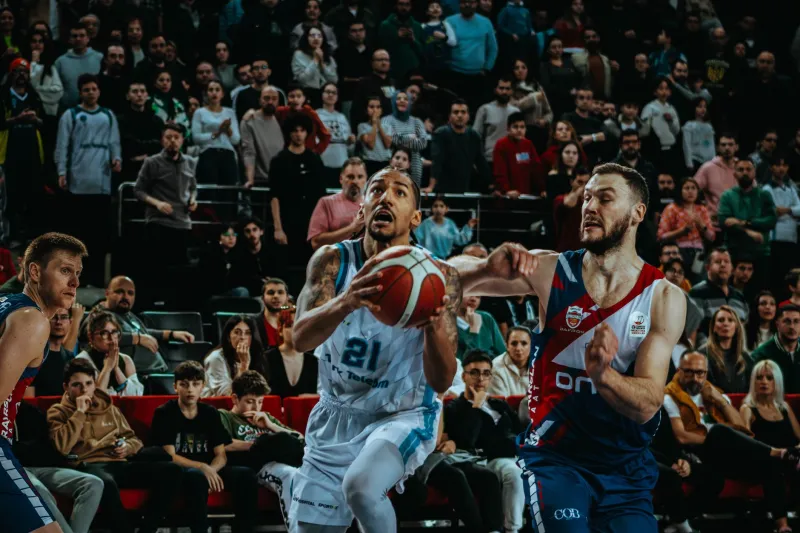
The buzzer sounds. Handshakes happen. And then, somewhere near midcourt, two grown men who just spent 40 minutes elbowing each other in the paint will grab the hem of each other's jerseys, pull them over their heads, and walk off the floor wearing each other's country's colors.
If you've watched any FIBA basketball over the last few years, you've seen it. The jersey swap has become the ritual that defines international hoops — more so than the trapezoidal lane, more so than the physicality, more so than even the anthems. And what started as a simple gesture of respect between professionals has quietly morphed into something nobody in 2015 could have predicted: a legitimate collector's economy where a sweat-soaked synthetic tank top can out-earn an NBA rookie's game-worn kit.
The Unwritten Rulebook
There's no official FIBA memo governing jersey swaps. The etiquette exists purely in the collective consciousness of the locker room, and it's surprisingly strict.
Rule one: the star doesn't ask. If you're the household name, you wait. A rookie requesting Luka Dončić's shirt is fine. Luka requesting a rookie's shirt would be strange — a power move so gracious it borders on charity, and it almost never happens.
Rule two: no swaps between teammates, obviously, and no swaps if the game ended in genuine acrimony. There are documented near-misses — a 2023 qualifying window game where two players exchanged words at the final buzzer, then pointedly walked past each other holding their jerseys. The clip did numbers on basketball Twitter precisely because of what didn't happen.
Rule three, and this is the big one: you only get one. A player has exactly one jersey to give per game. Choose wisely.
Why a FIBA Kit Beats an NBA Rookie's Shirt
Here's where it gets fun. On the secondary market, a game-worn jersey from an anonymous NBA rookie might fetch $200 to $400. Meanwhile, collectors tell us that authentic swap-adjacent FIBA memorabilia — particularly from stars in national team colors — routinely clears four figures.
"The scarcity is the whole thing," explains one memorabilia dealer who asked to remain anonymous because, in his words, "the sourcing gets weird." "An NBA player wears a new jersey every game. There are dozens per season. A national team jersey? A player might wear the same kit across an entire tournament window. If that jersey gets swapped and surfaces, it's one of maybe a handful in existence tied to that specific run."
Add the emotional layer — national colors, Olympic qualifiers, a player representing his homeland rather than his employer — and you've got a story attached to fabric. Collectors don't buy fabric. They buy stories.
The Swap That Started a Bidding War
Every collector community has its legend. This one belongs to a fan in Manila.
During a FIBA World Cup game, a player — we'll spare him the resale drama and keep it vague — swapped jerseys not with an opponent, but with a courtside fan who'd been screaming his name for four quarters. The clip went viral. Within 48 hours, offers for the jersey were flooding the fan's DMs. By week's end, an international bidding war had erupted between collectors in three continents, with reported offers climbing past $10,000.
The fan, to his credit, kept it. He told local media it was going over his fireplace, not to the highest bidder. Collectors still bring it up with the mix of admiration and agony you'd expect from someone describing the one that got away.
The Players Who Collect the Collectors
Not everyone swaps to be nice. Some players are building museums.
Ask around international basketball and you'll hear about certain veterans — usually guys with 15-year national team careers — whose closets hold dozens of swapped kits, organized by tournament. One longtime EuroLeague stalwart reportedly has a section dedicated solely to jerseys pulled from Asian qualifying windows. These aren't keepsakes gathering dust; they're trophies of a career spent crisscrossing the globe, each shirt a stamp in a passport made of polyester.
And the players know what they're holding. Young stars have become savvy about which swaps generate buzz, and a viral exchange with an American NBA player during a FIBA event is now, functionally, a marketing event.
How to Spot the Real Thing
If you're a US-based collector dipping a toe into this market, a few pointers:
- Provenance is everything. A swap captured on broadcast is gold. A jersey with a "my cousin works at the arena" backstory is a coin flip.
- Watch the tags. National team kits often carry tournament-specific patches and sizing quirks that fakes miss.
- Follow the swaps, not the auctions. The best deals happen hours after a viral exchange, before the market prices in the hype.
- Beware the "game-worn" inflation. Practice-worn and game-worn are different animals, and sellers know buyers don't always ask.
More Than Merch
Strip away the dollar signs and the ritual still makes sense. The NBA has its handshake lines and its postgame jersey signings for kids. FIBA has something more primal: two representatives of different basketball worlds acknowledging, in front of cameras, that they've just shared something rare.
That a sweaty shirt can carry that much meaning — and that much market value — says less about the jersey and more about what international basketball has become. The world stage used to be a stepping stone. Now it's the main event, and everyone wants a piece of it.
Even if that piece is 90% moisture.