Follow the Money: Why Hosting a FIBA Tournament Is the Best Business Deal in Basketball
Let's be honest: when most American fans think about the business of basketball, they think about the NBA. Billion-dollar TV deals, arena naming rights, Steve Ballmer throwing cash around like it's Monopoly money. But there's a whole other economy humming along underneath the global game, and it operates on a completely different playbook.
National federations — the folks who run basketball in countries like Spain, Germany, and the Philippines — have turned FIBA tournaments into genuine profit machines. And once you look under the hood, you start to wonder if some NBA owners wouldn't trade places.
Hosting Rights: The Ultimate Seller's Market
Here's the thing that surprises most US fans: countries don't just get to host FIBA events — they compete for the privilege, sometimes with bids that look like Olympic city campaigns.
The 2023 FIBA World Cup, split between the Philippines, Japan, and Indonesia, was a case study in monetization. The Philippines alone poured serious public and private money into hosting the final phase in Manila, betting that ticket sales, tourism, and sponsorship activation would more than cover the bill. For a basketball-mad market like that, the bet makes sense. When Gilas Pilipinas plays a home World Cup game, you're not selling tickets — you're selling a national event.
Contrast that with the NBA, where teams essentially rent their audiences from a fixed home market. A federation that wins hosting rights gets a temporary monopoly on the entire sport in their country. That's a leverage position no franchise ever gets.
Sponsorship Structures That Would Make a Madison Avenue Exec Weep
The sponsorship game at FIBA events works differently too. Instead of one league selling uniform patches and court ads, you've got layers: FIBA's global partners sit at the top, then national federations sell their own local sponsorships, then the host organizing committee layers on regional deals.
What does that mean in practice? A single World Cup game can feature a Chinese sportswear brand on one team's jersey, a Gulf airline on the courtside boards, and a local telecom giant on the tickets — all monetizing the same 40 minutes of basketball. Nobody has to share. The NBA, by comparison, runs a much more centralized machine where the league office controls most premium inventory.
Federations also get creative with their national team kits. Jersey sponsorship deals with national programs — think of the longtime partnerships between European powers and their domestic kit manufacturers — often run on multi-year cycles that include World Cup and Olympic windows. Those jerseys don't just get worn; they get bought. Ask anyone who tried to get their hands on a Germany jersey after the 2023 final.
Broadcast Deals Built for Time Zones, Not Tradition
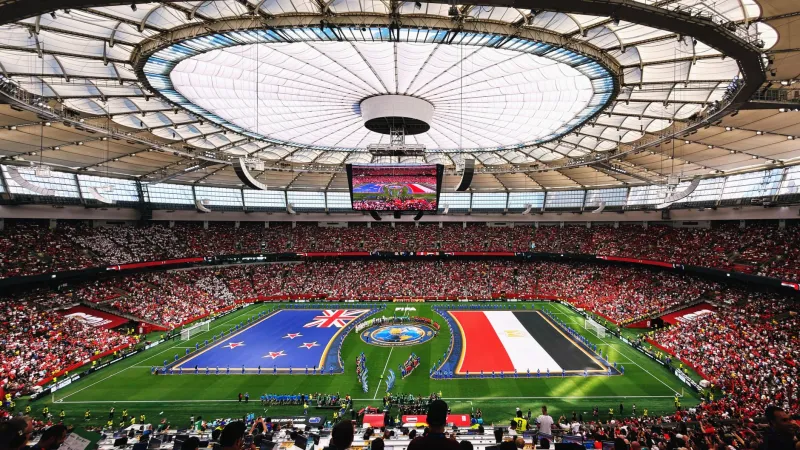
The NBA sells its product primarily to one domestic market with a global add-on. FIBA events flip that equation entirely. A World Cup is inherently a global broadcast property, which means rights get sold territory by territory — and federations benefit when their national team's games draw monster ratings at home.
Olympic basketball is the extreme version of this. When France plays the USA in a gold medal game, broadcasters across a dozen European markets are all paying for the same product, each with their own local ad sales. The NBA's Christmas games are big; a US-France final is a worldwide appointment.
What the Numbers Actually Look Like
FIBA doesn't publish the kind of granular financials the NBA does, but the directional data is hard to ignore. FIBA has reported revenue growth across its four-year competition cycles, with World Cup and Olympic windows driving the bulk of it. Host federations routinely point to triple-digit millions in combined economic impact from ticketing, hospitality, and tourism when the math is done right.
No, it's not NBA money — the league's national TV deal alone dwarfs anything FIBA touches. But the margins are a different story. A federation hosting a tournament isn't carrying a roster of max contracts or a $2 billion arena mortgage. The overhead is lean, the demand is passionate, and the product is national pride, which turns out to be the best-selling asset in sports.
The Lesson American Fans Should Take Away
The next time you watch a FIBA qualifier from a packed arena in San Juan or a sold-out EuroBasket semifinal, understand what you're seeing: a business model that monetizes passion directly, without the中间 layers of franchise valuation and revenue sharing that define the American game.
NBA owners are jealous for a reason. They've spent decades trying to manufacture the kind of organic, whole-country investment that international basketball generates for free. Adam Silver can expand the play-in tournament all he wants — he'll never get an entire nation to rearrange its schedule around a Tuesday night qualifier.
Global basketball isn't the minor leagues of the sport. Financially speaking, it might be the smartest version of the game on the planet.