Chirping Across Borders: The Secret Dictionary Every FIBA Import Learns First
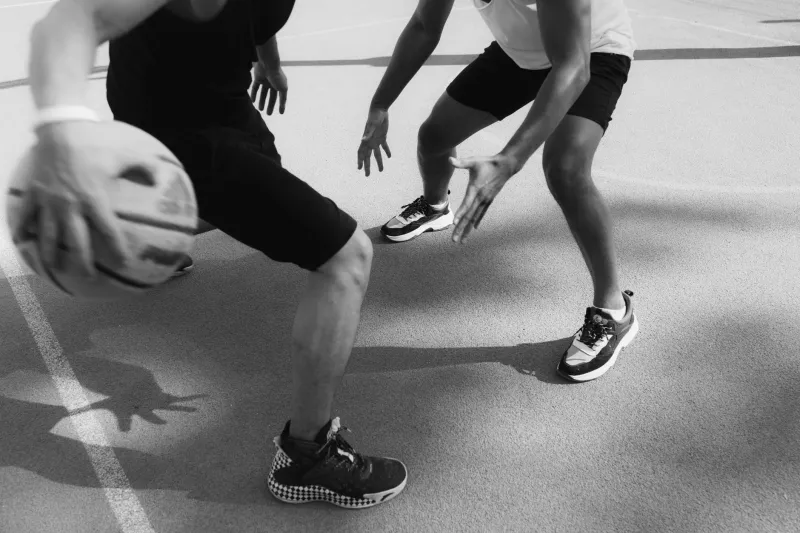
Every American player who signs that first overseas contract learns the same brutal lesson within a week: your game travels, but your words don't. You can cross over a defender in Athens the same way you did in Atlanta, but the moment you open your mouth to let him know about it, you're speaking gibberish.
So imports adapt. And the way they adapt turns out to be one of the funniest, most underreported subcultures in all of basketball.
The First Three Phrases Every Import Learns
Ask around, and you'll hear the same story from Americans who played everywhere from Turkey to Argentina. Long before they learned how to order dinner or ask for directions, they learned how to chirp.
"You pick up the trash talk first because your teammates teach you," one former EuroLeague guard told me, laughing. "The veterans take it as a personal project. They want you defending the team's honor in your second language."
The curriculum is remarkably consistent across continents. There's the "you're soft" phrase. There's the "that's a foul, ref" phrase — usually the second one mastered, usually shouted with worse grammar every possession. And then there's the mother of all international trash talk: a simple, guttural "get out of here" that seems to exist in every language on earth and sounds roughly the same in all of them.
Mistranslations are where it gets gold-medal funny. One import in Spain spent an entire half telling an opponent he was "very cooked," thinking he'd learned an insult, when he'd actually complimented the guy's cooking. Another player in Greece once told a defender his mother was a "beautiful referee." He meant something far less polite. The gym laughed for a week. He still doesn't fully know what he said.
The Hand Signal Economy
Here's the beautiful part: even when the words fail, the game never loses its voice. Basketball has developed a shadow language of gestures that requires no translation whatsoever.
The "too small" taunt? Works in Manila, works in Milan, works in Montevideo. The jersey flex after an and-one? Universal. The dismissive wave to an opposing bench after a corner three — that one might get you a fine in some leagues, but everybody on the planet knows exactly what it means.
Former imports describe this as the great equalizer. "My first month in France, I couldn't say a word," one forward recalled. "But I could count on my fingers how many points a guy had while staring at him. That's a language. Everybody's fluent."
Referees, notably, are not always fluent. Several players mentioned that gestures get them technicals abroad more than words ever did — FIBA officials tend to crack down on the theatrical stuff faster than your average NBA ref.
Trilingual Chirpers Are Real and They're Glorious
The true royalty of international trash talk are the journeymen — guys who've played in four or five countries and can rotate insults across languages within a single possession.
Imagine it: a Spanish phrase for the big man boxing you out, a Turkish word for the guard who just traveled, and then a fallback in English because, honestly, everyone understands tone. These players become legends in locker rooms. Teammates lobby to room next to them on road trips just for the commentary.
And there's a genuine competitive edge to it. Players swear that chirping in an opponent's native language hits different — it signals respect and disrespect simultaneously. "I learned to say 'sit down' in Lithuanian," one guard said. "When I said it to a Lithuanian player, he was so shocked he missed his next two shots. Best money I ever spent on a language app."
What This Means for the Rest of Us
For American fans raised on NBA mic'd-up segments, the international version is both wilder and warmer. Less scripted, more creative, and occasionally conducted in three languages at once. The next time you're up at 3 a.m. watching a qualifier from somewhere with a seven-hour time difference, listen closely. Somewhere under the broadcast, there's a whole second game being played in the universal language of getting under someone's skin.
It doesn't translate. It doesn't need to.