Lost in Translation? Not on These Teams: Inside the Language Lab of FIBA Locker Rooms
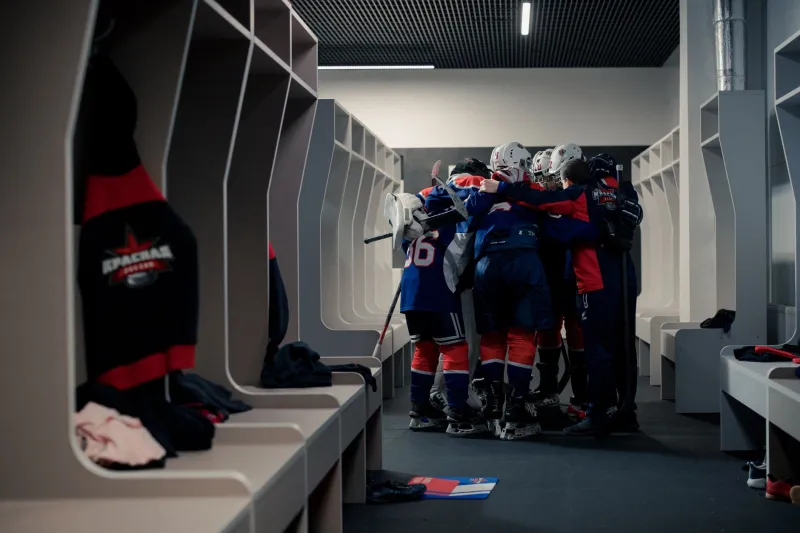
Picture this: you've got four days before your first FIBA window game. Your starting point guard speaks Serbian. Your stretch five speaks Spanish and a little Italian. Your NBA wing has been stateside since June and hasn't run a single one of your sets. And the entire country expects you to beat a qualifier team that's been practicing together since high school.
Welcome to international basketball, where the real X's and O's get drawn in a group chat with three different translation apps open.
Basketball Is a Language — Until It Isn't
Here's the thing most American fans never think about: NBA guys assume everyone speaks hoop. And honestly, most of the fundamentals do translate. A pick-and-roll is a pick-and-roll in Belgrade, Buenos Aires, and Brisbane.
But the vocabulary underneath? Totally different planets.
A Spanish-speaking player might call a ball screen "bloqueo directo." A Greek teammate hears the coach yell something in his fourth language. The Lithuanian big man learned basketball in a system where "weak side" means something completely different from what Coach drew up this morning. Multiply that by twelve guys from three continents and you've got a locker room where the whiteboard looks like a UN resolution.
That's why FIBA teams don't just install offenses during training camp. They install language.
The Universal Dictionary Nobody Wrote Down
Ask around international basketball and you'll hear about an unofficial glossary that's developed over decades of cross-border competition. Numbers replace words. "Five out" means five-out everywhere. Hand signals do the heavy lifting — a fist for iso, an open palm for spread, two fingers for a twist action.
Smart national team coaches lean into this hard. Instead of teaching 12 players a new terminology, they strip the offense down to numbering systems and gestures that work regardless of what's coming out of anyone's mouth. The play call becomes a shape, not a sentence.
There's also the sneaky hack every international coach knows: basketball players who've competed against each other for years in Euroleague and FIBA tournaments already share a competitive vocabulary. They've felt each other's games. That muscle memory of guarding a guy in a 2022 qualifier? That's chemistry you can't script in a walkthrough.
The 48-Hour Bonding Sprint
Chemistry at the international level isn't an accident — it's scheduled like a dentist appointment.
Team meals are mandatory and long. Veteran captains run the room, often literally translating the coach's message into locker-room shorthand. Teams that click fast usually have a captain who speaks the most languages and holds the least ego — the guy who'll grab dinner with the rookie from the domestic league and the NBA All-Star on the same night.
And the bonding rituals? They're real. Cards. Video games. A team that can't talk to each other off the floor absolutely cannot talk to each other on it. Coaches know this, which is why the first 48 hours of any FIBA camp look less like practice and more like summer camp with better athletes.
Why Team USA Doesn't Feel This (And Why That's a Problem)
Here's the uncomfortable opinion part: Team USA has historically never had to solve this problem. Everyone speaks English. The talent gap papered over any chemistry deficit for decades.
But the world caught up. And now, when the Americans face a Serbian squad that's been running the same actions together since juniors, or a French team where every player knows exactly where the other nine guys want the ball, the talent gap isn't big enough to hide the chemistry gap anymore.
The best international programs aren't just assembling the best players. They're assembling the best communicators — guys who've played abroad, who speak multiple basketball dialects, who can run an offense with a shrug and a pointed finger.
The Takeaway
Next time you watch a FIBA game and see a no-look dish that seems impossibly intuitive, remember: those two players might not share a spoken language. What they share is something harder to build and way more valuable — a common basketball tongue, learned across a decade of international hoops, one hand signal at a time.
The scoreboard only shows the points. It never shows the translation work that got them there.