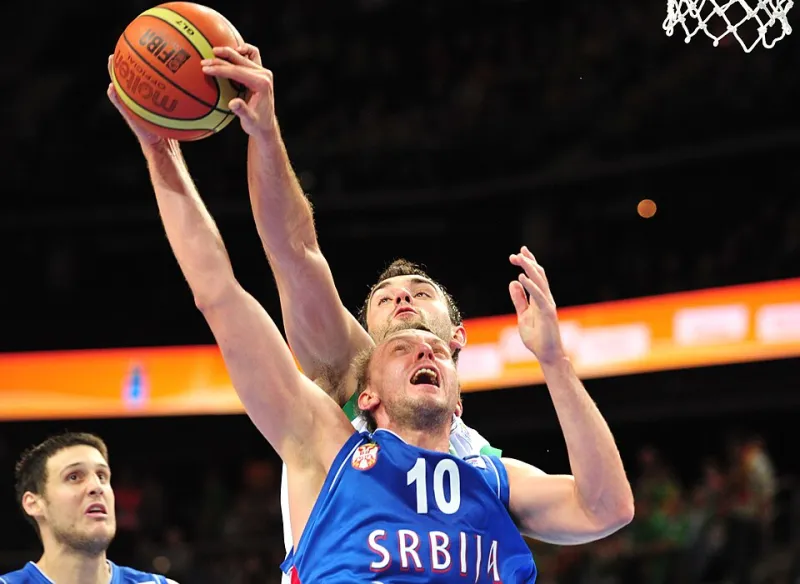
Two Spots Short of a Full Bench: The Brutal Math Every National Team Coach Hates

Photo by Photo by Simon Kessler on Unsplash on Unsplash
Somewhere right now, a national team coach is staring at a spreadsheet with 14 names on it and a rule that says he can only keep 12. Three of those guys made the All-Star team last season. One of them won him a medal two summers ago. All of them have agents who already leaked the roster to the press.
Welcome to the cruelest arithmetic in basketball.
The Three Spots Nobody Talks About
The NBA carries 15 players (plus two-way deals on top of that). FIBA hands you 12 and wishes you luck. That doesn't sound like a huge gap until you realize what those extra three NBA spots actually do: they're where teams hide specialists. The backup rim protector. The emergency shooter. The veteran locker-room guy who hasn't played real minutes since March.
National teams don't get that luxury. Every single roster slot has to earn its place, which means coaches are forced into conversations their NBA counterparts never have to have. Do we take the fourth star who'll be miserable in 12 minutes a night, or the defensive wing who lets our best player actually rest? Do we carry two point guards or three? If our starting center fouls out in a quarterfinal, who's left?
In the NBA, a bad 14th pick on your roster costs you nothing. At a FIBA World Cup, it costs you a medal.
The Snub Hall of Fame
Every Olympic cycle produces a cut that dominates the news cycle for a week, and the list of victims is genuinely absurd by NBA standards.
Think about it: players with Finals rings have been left off rosters for guys coming off average seasons, purely because a coach decided he needed a specific skill more than a specific name. Elite scorers have watched qualifying windows from their couches because a coach decided he already had enough buckets and needed a screener. All-Star guards have been told, politely, that the team is going in a different direction — toward a 6'8" glue guy who averages six points.
And here's the thing: the coaches are usually right. That's the uncomfortable part. When the games get tight and the scouting is sharp, the team with the better fit beats the team with the better resumé almost every time. International basketball is a puzzle with the lights on. There's nowhere to hide a bad roster construction.
Why Cutting Stars Makes Teams Better
Here's my actual argument, and I'll defend it in the comments: the 12-man limit doesn't just force smarter roster-building — it forces smarter basketball.
When you can only carry 12, you can't afford players who do one thing. Every guy on the floor has to be able to switch, screen, pass, and shoot well enough that defenses can't ignore him. The result is a game that flows differently than the NBA product: more movement, fewer isolations, more genuine five-man basketball. Stars still star. But they star inside a system, because the guy next to them isn't a specialist being hidden — he's a real player who earned a real roster spot.
Now flip it around. NBA benches are deep enough that a coach can play 10, 11, even 12 guys in a playoff rotation if he wants. That's great for surviving an 82-game grind. But in a single-elimination international tournament? Depth is a mirage. You need your best five playing heavy minutes, and you need every one of the other seven to know exactly who they are. The 12-man rule is a forced clarity machine.
The Counterpoint (Because There's Always One)
The fair pushback: shorter rotations mean more injuries, more fatigue, more stars gassing out in the fourth quarter of a quarterfinal. Ask any Team USA fan watching a lead shrink in the third quarter against a fresh European squad that scouted the pick-and-roll for two weeks. Fatigue is real, and the 15-man NBA model at least gives you the option to rest people.
But notice that's an argument about minutes management, not roster size. You can play eight guys with a 12-man roster. The rule doesn't stop you. It just stops you from carrying three guys who can't help you when it matters.
The Verdict
The NBA could never adopt this. The players' union would riot, tanking teams would lose a way to stash contracts, and half the league's end-of-bench legends would be unemployed. Fair enough.
But every time an American fan watches a FIBA tournament and wonders why the games feel sharper, more connected, more desperate — this is a big part of the answer. Twelve jerseys. Zero hiding spots. And a coach somewhere, right now, about to make a phone call he's dreading.
The math is brutal. That's exactly why it works.