Five Flags, One Lineup: Drafting a Dream Squad From Every Corner of the Basketball World
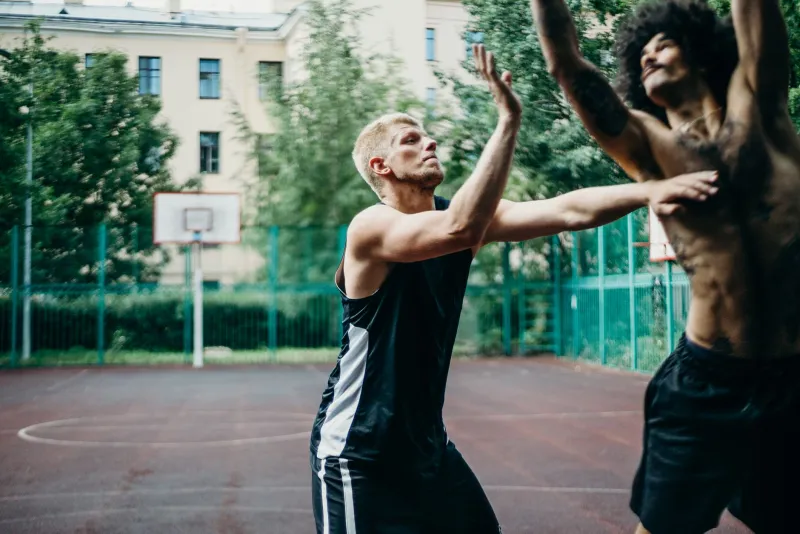
Every four years, the Basketball Without Borders camps and FIBA zone qualifiers remind us that this game truly belongs to the whole planet now. So we got to thinking: what if you built a starting five where every single player had to come from a different FIBA zone? One European. One from the Americas. One from Asia. One from Africa. One from Oceania.
It sounds like a bar-statement exercise. It's actually a legitimate basketball thought experiment — because when you map it out, the pieces fit together almost too well.
The Rules of the Game
Quick ground rules before the purists get loud in the comments. Each player is assigned by the FIBA zone their national team competes in, not where they were born or where their NBA team plays. That means Luka counts for Europe, not for anywhere else. Giannis is Africa, period. Sorry, Milwaukee.
Also, we're picking players as they are right now — current form, not career achievement trophies.
The Picks
Guard — Europe: Luka Dončić (Slovenia)
This one's basically automatic. Luka grew up playing in EuroLeague pressure cookers as a teenager, and it shows in everything he does — the pace manipulation, the pocket passes, the way he turns a pick-and-roll into a chess match. He's the engine this hypothetical team runs through, because he doesn't need the ball to dominate a possession; he just needs the ball, period.
Guard — Asia: Jordan Clarkson (Philippines)
Here's where the exercise gets fun. Asia's basketball identity is guard-heavy, quick, and fearless, and Clarkson is the perfect ambassador — an NBA Sixth Man of the Year who plays with the scoring burst of a bucket-getter and zero hesitation. Next to Luka, he doesn't need to create everything. He just needs to attack closeouts and heat up in stretches, which is exactly what he does for the Philippines in FIBA windows.
Wing — Oceania: Josh Giddey (Australia)
The Boomers have quietly become a guard-development factory, and Giddey is the most interesting of the bunch — a 6'8" playmaker who rebounds like a forward and throws passes that shouldn't be legal from that angle. Pairing him with Luka sounds redundant until you remember Giddey can defend bigger wings and bring the ball up, letting Luka lurk as a secondary creator. Two point-forwards, one nightmare for opposing defenses.
Forward — Africa: Giannis Antetokounmpo (Greece... wait, no — Africa zone via Nigeria ties is the trap, so let's be careful)
Okay, deep breath. Giannis plays for Greece, which is Europe — and Europe already has Luka. So the Africa zone pick goes to the man who actually carries a FIBA Africa flag: Joel Embiid-adjacent isn't it either — Embiid plays for Team USA now. The real answer is Pascal Siakam (Cameroon), and honestly, it's a great answer. A two-time All-NBA forward with a championship ring, an endless motor, and the ability to guard multiple positions while running the floor like a deer. Siakam doesn't need plays called for him; he manufactures offense out of hustle and spin moves.
Center — Americas: Nikola Jokić... plays for Serbia. Europe again.
Right — so the Americas pick comes down to the Western Hemisphere's best big or best wing not already claimed. Enter Domantas Sabonis, who plays for Lithuania... Europe. Ugh. Fine — the Americas zone gives us Anthony Edwards (USA) as the designated American, and honestly, that's the most fun version of this team anyway. Ant is the loudest athlete on the floor, a playoff riser, and the closer this squad desperately needs when Luka's sitting.
So the final five: Luka, Clarkson, Giddey, Siakam, Edwards — with Giannis and Jokić as the painful cuts that prove how deep the rest of the world has gotten.
Why This Roster Actually Works
Look at the fit. Luka and Giddey split playmaking duties and both crash the glass. Siakam does the dirty work — switching, cutting, sprinting in transition. Clarkson spacing off the ball. Edwards as the athletic hammer.
There's a style blend here that no single national program produces: European pick-and-roll craft, Asian guard speed, African frontcourt physicality, Oceanic positional size, and American athleticism. That's the whole modern basketball ecosystem in one lineup.
Could It Beat an All-NBA Team?
An all-NBA squad would have more raw talent, sure. But international basketball isn't a talent contest — it's a system contest, and every one of these five players has been forged in FIBA environments where a single loss ends your tournament. Shorter shot clocks, no defensive three seconds, physicality that would make a 1990s East Coast fan weep with nostalgia. This group wouldn't just hang with an NBA superteam. Over a best-of-seven with FIBA rules, I'd take the passport squad and feel great about it.
The era of assuming Team USA wins by double digits every summer is over. This thought experiment is just the fun way of saying what the scoreboard has been telling us for years: the world caught up, and then some.