Fourteen Seconds to Save Your Season: The Rule That Makes FIBA Endings Better Than the NBA's
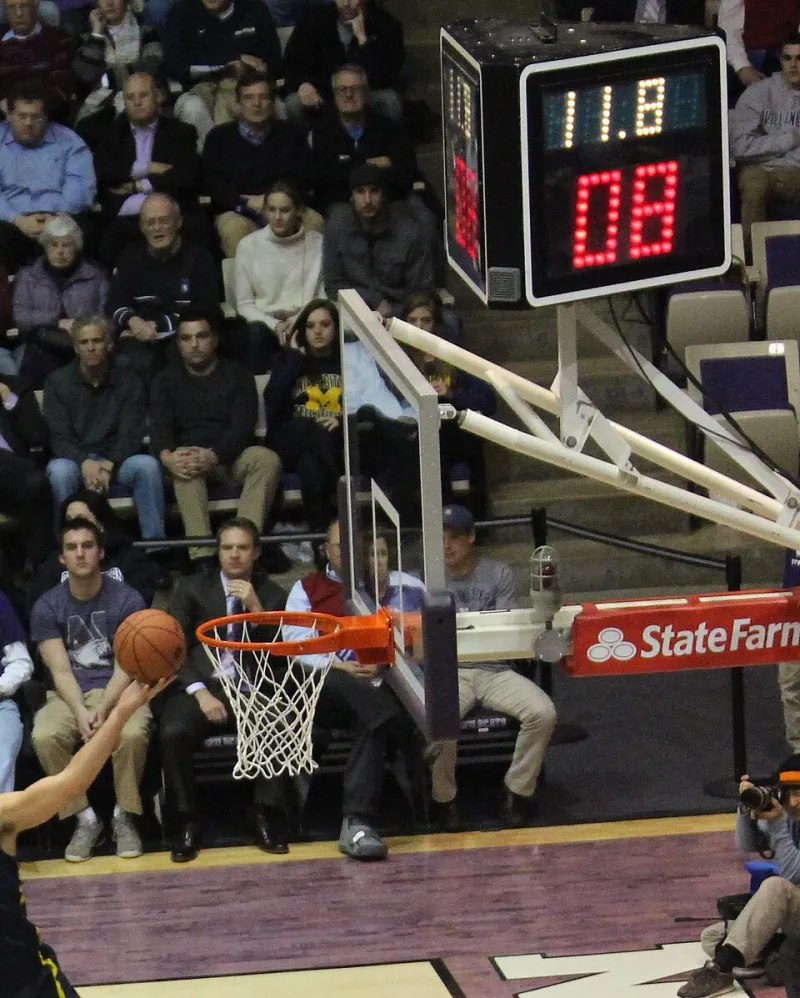
Photo: TonyTheTiger, CC BY-SA 3.0, via Wikimedia Commons
There's a moment in every close FIBA game that NBA fans don't really have a word for. It happens after a miss, after the big man tips the ball back out, and suddenly the scoreboard clock in the corner isn't showing 24. It's showing 14. Sometimes 12. Sometimes less.
That number changes everything.
The Rule Nobody Talks About Enough
Here's the mechanics, for those who've only ever watched NBA ball: in FIBA, when a team grabs an offensive rebound, the shot clock doesn't reset to 24. It resets to 14. That's it. That's the whole rule. And yet it might be the single biggest reason international basketball feels so much more frantic in the final five minutes than anything you'll see on a Tuesday night in November stateside.
The NBA briefly flirted with the idea back in 2018 — the G League trialed a 14-second reset, coaches mostly liked it, and the league's competition committee did what competition committees do best: nothing. Meanwhile, FIBA has been running this experiment for decades, and the results are sitting right there on film.
Watch the Endings, Not the Highlights
Go back and rewatch some of the great FIBA finishes and you'll notice something the highlight reels skip: the possession before the possession.
When a team chases a missed three in a one-point game with 40 seconds left, they're not just fighting for the ball. They're fighting for the ball and a functioning clock. Grab it, and you've got 14 seconds — enough for one action, maybe one and a half. A flare screen. A dribble-at. A quick-hitting flare for the shooter in the corner. No time for a coach to burn a timeout and draw up a masterpiece. The rule forces improvisation under duress.
Contrast that with the NBA, where an offensive board in a clutch situation often means a full reset — 24 fresh seconds to walk the ball up, run your ATO set, and let a star survey the floor like he's picking out produce. It's competent basketball. It's rarely desperate basketball.
Desperation is the product. That's what the 14-second rule actually manufactures.
The Math of Panic
Think about what 14 seconds eliminates. It eliminates the reset dribble. It eliminates the post-entry that goes nowhere. It eliminates three seconds of standing around while the point guard points at the floor.
What it preserves is one good idea. Teams that practice end-of-game situations at 14 seconds — and the good international programs drill this relentlessly — develop a hierarchy. First option: corner three for the best shooter. Second: quick slip for the roller. Third: foul or heave. There's no fourth option, because there's no time for one.
The result is a late-game possession density that the NBA can't match. More offensive rebound chases actually matter, because the reward isn't just extra points — it's extra points at pace. Second-chance threes off a 14-second reset are among the highest-leverage shots in international basketball, and every coach on this side of the Atlantic knows it.
Why the NBA Keeps Saying No
The official reasoning is usually about star balance — giving elite scorers full possessions to work, preserving the rhythm of the game, protecting the product. And sure, there's something to that. Nobody's asking for 14 seconds of chaos on every possession.
But here's the uncomfortable question: whose rhythm are we protecting? The players already overwhelmingly favor shorter resets in surveys. The G League trial went fine. The NCAA went to a 20-second reset years ago without the sport collapsing. The only constituency that truly benefits from 24-after-offensive-rebound is the one that likes its stars holding the ball for eight seconds before anything happens.
FIBA's version isn't perfect either — 14 seconds can produce rushed garbage against elite defensive rebounding teams, and there's a real skill gap in how different nations handle it. But rushed garbage with a ticking clock beats controlled stagnation nine times out of ten. At least the garbage is trying something.
The Verdict From the Couch
Look, this isn't a call for the NBA to adopt FIBA wholesale. The leagues have different athletes, different spacing, different everything. But the 14-second reset is the rare rule that's already been de-risked by decades of international play, thousands of games, and a full FIBA ecosystem running it without incident.
The NBA loves to market itself as the pinnacle. Fine. But the pinnacle of what — star isolation or basketball? Because when the clock says 14 and the season is on the line, international basketball is producing the endings the American product keeps promising and not always delivering.
The shot clock doesn't lie. The NBA's just refuses to tell the whole truth.