Four Feet Shorter, One Whole Game Different: The Hidden Math of the FIBA Court

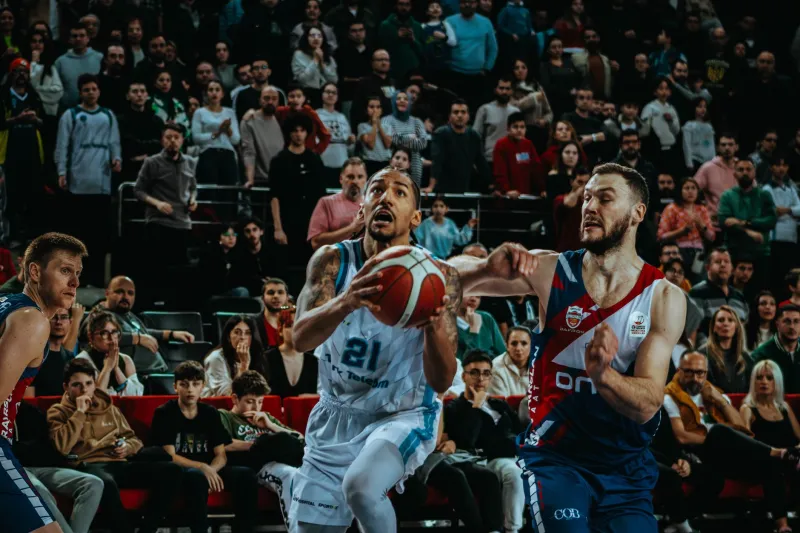
Photo by Photo by Edgar Chaparro on Unsplash on Unsplash
You've watched Steph Curry hit 40-foot bombs. You've seen Joel Embiid bully people in the post. Then the FIBA World Cup tips off, and suddenly Curry is 3-for-11 and Embiid is picking up three offensive fouls in the first quarter.
It's not a fluke. It's geometry.
The FIBA court looks almost identical to an NBA floor at a glance — same ten players, same hoops, same game on the scoreboard. But the dimensions are just different enough to bend the entire sport out of shape, and if you understand why, you'll watch international basketball completely differently.
The Three-Point Line: The Difference Between Open and Wide Open
The FIBA arc sits at 6.75 meters — about 22 feet, 1.75 inches at its deepest point. The NBA line is 23'9" at the top of the key. That might not sound like much, but for a shooter, it's the difference between a contested jumper and a layup drill.
Think of it this way: in the NBA, the guy closing out on you has to travel farther to get there. On a FIBA floor, that same closeout starts a foot and a half closer, which means your window to shoot shrinks by a split second. Elite NBA shooters suddenly need to fire faster, and that rhythm disruption is exactly why some sharpshooters look human in red, white, and blue.
The flip side? Big men who can't shoot a lick in the NBA find themselves in range. A slow-footed center with a 21-foot stroke is suddenly a spacing threat. The floor compresses, and everyone's role shifts one seat over.
A Lane With Angles (And a History Lesson)
Here's a fun one to drop at your next pickup game: FIBA didn't switch to a rectangular lane until 2010. Before that, the free-throw area was a trapezoid — wider at the baseline, narrower at the line — a shape borrowed from the old FIBA and European courts going back decades.
The trapezoid made post-ups geometrically miserable. You caught the ball farther from the rim, with less real estate to back your man down. When FIBA finally adopted the NBA-style rectangle, international basketball quietly became more post-friendly. But the current FIBA lane is still narrower than the NBA's 16-foot key — it's 4.9 meters wide, roughly 16 feet, so it's close, but the restricted area and no-charge semicircle rules differ enough to change how drivers finish.
The result: NBA rim protectors who camp in the paint get less room to operate, and physical bigs like the Gasol school of basketball — patient, hip-to-hip interior play — translate better than you'd expect.
Two Fewer Seconds on the Clock
FIBA runs a 24-second shot clock, same as the NBA... but here's the catch: offensive rebounds reset to only 14 seconds, and there's no "transition opportunity" grace period. Possessions die faster. Teams that thrive on second-chance points and slow, methodical post-ups find themselves rushed.
Combine that with the compressed floor and you get a game that's faster, more physical, and far less forgiving of half-court hero ball. Iso-heavy NBA stars who need five dribbles to create suddenly face a defense that's already there.
Why the Same Shooter Looks Like Two Different Players
I talked with a college analytics analyst who works with international prospects — let's call him a "shot doctor" for the scouting crowd — and his take was blunt: "We track release speed and foot placement, and the FIBA line basically deletes half a second of shooting time. Guys with quick triggers don't notice. Guys with long, pretty NBA strokes do."
His point: the NBA's deeper arc rewards high-release, slow-mechanics snipers because defenders can't reach them. FIBA's shorter line rewards fast triggers and punishes slow ones. It's the same player, two different physics engines.
How to Watch With New Eyes
Next time you flip on a FIBA qualifier at 3 a.m. (we've all been there), watch for three things:
- The compressed spacing. Count how many defenders are within two passes of the ball. On a FIBA floor, it's usually one more than you'd see in an NBA game.
- The pace of resets. After an offensive board, watch how fast teams attack — that 14-second clock turns second chances into haymaker threes.
- Who's suddenly a shooter. Every FIBA tournament, some NBA bench big starts raining triples. He's not improved. He's just in range now.
The FIBA court isn't a worse version of the NBA court. It's a funhouse mirror — everything recognizable, everything slightly warped, and the players who adapt fastest are the ones who end up with gold medals hanging around their necks.