Stop Calling It 'Weird': The International Hoops Styles That Are Secretly Running the NBA
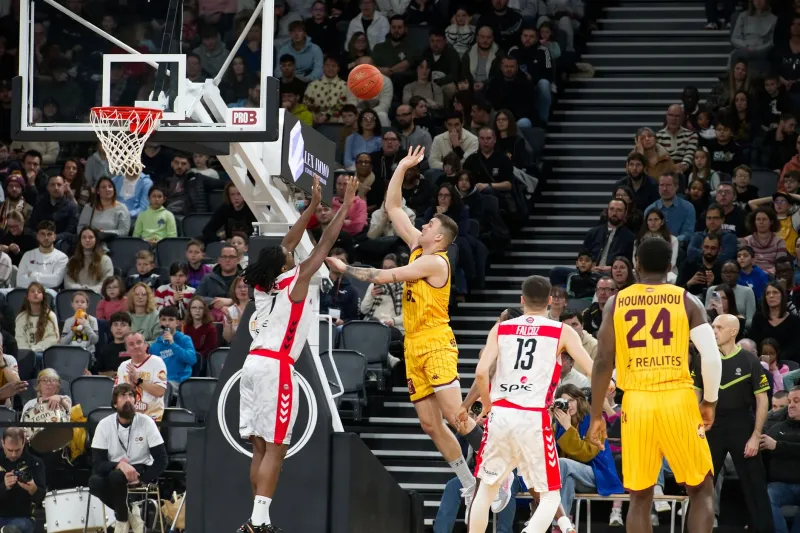
Every time the Olympics or a World Cup rolls around, a familiar chorus rises up on American timelines: this is so weird, the refs are rigged, why is there a zone? It's the basketball version of a tourist complaining that the food in Italy tastes different.
But here's the thing — that "weird" basketball keeps showing up in NBA Finals box scores. The Euro step. The deep pull-up. The blur of ball movement that makes a stationary iso look like it belongs in a museum. None of that came from nowhere. It came from leagues and national programs that America watches for two weeks every four years and then files away.
So let's do the homework. Here are five international basketball styles that US fans routinely misunderstand — and why ignoring them is a losing bet.
1. The Serbian School: Passing as a Weapon, Not a Courtesy
American basketball treats an assist as the happy byproduct of a good play. Serbian basketball treats it as the whole point.
Watch Serbia at any FIBA event and you'll see something that looks almost rude: the ball gets passed before the catcher is even open, because the system says the next pass is the one that breaks the defense. Nikola Jokić is the obvious export — a guy who led the NBA in touches like a point guard while built like a tackle — but he's not an anomaly. He's a graduate of a system where big men are expected to make decisions, not just set screens.
US fans call this style "boring" until their favorite team hires a coach from the Balkans and suddenly the offense looks three years ahead of everyone else's. The lesson: the pass isn't a nicety. It's the offense.
2. Spain's Motion Machine: Five Guys, One Brain
Spain ran international basketball for the better part of two decades not because it had the most talent — though the Gasol brothers alone were a problem — but because it had the most connected talent.
The Spanish national team's motion offense is a masterclass in cutting, re-screening, and spacing that never stays still. Nobody holds the ball. Nobody stands. If you've ever watched an NBA team's offense devolve into one guy dribbling for 14 seconds while four teammates watch, you've seen the exact thing Spanish basketball was built to prevent.
The sneaky part? NBA front offices know it. The league is stuffed with Spanish-language coaching trees and front office execs who cut their teeth on this stuff. The style already won. Fans just haven't caught up.
3. Australia's Physicality: Not Dirty, Just Done Apologizing
Every time the Boomers play Team USA, some corner of American basketball Twitter discovers — as if for the first time — that basketball is a contact sport.
Australian basketball isn't dirty. It's honest. The NBL and the national program play with a level of physicality on cuts, screens, and post defense that the NBA's whistle-heavy regular season has mostly sanded away. Patty Mills built a whole international career on being the toughest guy on the floor despite being one of the smallest. Joe Ingles turned "slow" into a superpower by bullying slower moments out of the game entirely.
The US lens reads this as "chippy." The rest of the world reads it as basketball played the way it's played everywhere else. When FIBA refs let you play through contact, that toughness isn't a flaw — it's a résumé.
4. The Lithuanian Big-Man Factory: Size With Skill Attached
Arvydas Sabonis was dropping no-look dimes from the elbow decades before NBA fans decided passing centers were a novelty. Domantas Sabonis is basically running his dad's highlight reel in Sacramento.
Lithuania — a country of under three million people — has produced an absurd pipeline of skilled big men because its basketball culture teaches tall kids to play like guards from day one. No post-up-and-dribble-into-a-turnover development. Footwork, touch, vision, then size.
American fans see a 7-footer with a handle and call it a unicorn. Lithuanian coaches see Tuesday.
5. The Argentine Blend: Pick-and-Roll as a Family Recipe
Manu Ginóbili didn't just bring the Euro step to San Antonio — he brought a whole philosophy. Argentina's golden generation won Olympic gold in 2004 by playing faster, looser, and more creative than anyone, turning the pick-and-roll into an improvisational art form rather than a set play.
The NBA spent years trying to systematize what Argentina did by feel. Now every team runs some version of it every possession. Campazzo, Deck, and the current generation still play with that same chaotic joy, and it still gives structured teams headaches.
The Point of All This
The gap between "international basketball" and "NBA basketball" has never been smaller, and the direction of influence has flipped. The styles coming into the league — the passing bigs, the motion offenses, the physical perimeter defense — are the ones winning playoff series.
So the next time a FIBA tournament has you reaching for the word "weird," try a different one: early. America doesn't understand these styles yet. It will. It always does — about five years after the rest of the world.