One Word, One Whistle, One Semifinal Gone: When Language Became Basketball's Silent Killer
We spend so much time talking about talent gaps, scheme differences, and the trapezoid lane that we forget international basketball has a flaw hiding in plain sight: nobody always understands each other.
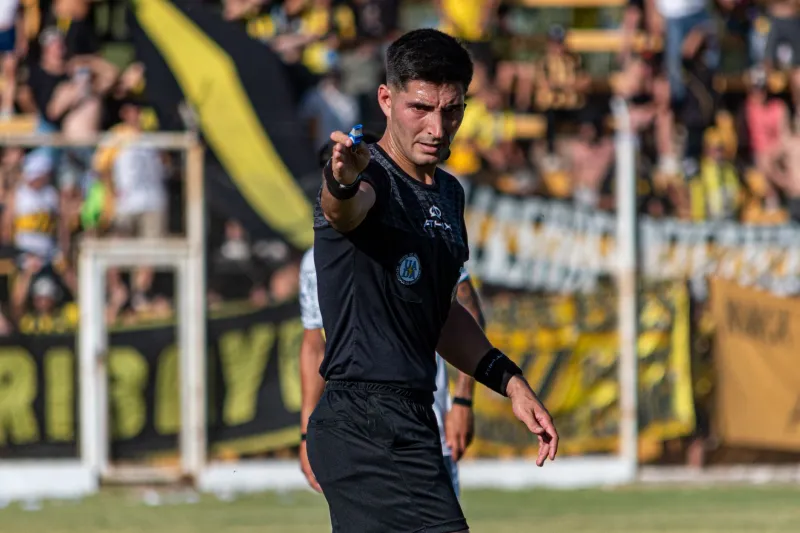
A Serbian coach screaming instructions in Serbian. A Lithuanian referee answering in gestures. An American star trying to figure out whether the defender touching his hip is legal under FIBA rules. Multiply that confusion by 40 minutes of a semifinal with a medal on the line, and you've got a powder keg waiting for a spark.
Sometimes that spark is a single word.
The Play Everyone Remembers (For the Wrong Reason)
FIBA knockout games have a long history of chaos, but the moments that sting the most aren't the buzzer-beaters — they're the breakdowns. Think of the infamous late-game sequences where a coach pleads for a timeout, the bench signals frantically, and the officials either miss it or misread it entirely. In one notorious semifinal, a team's staff believed a timeout had been granted. The players set up a play. The refs never blew the whistle. The possession ended in a rushed, broken heave, the game slipped away, and the postgame press conference turned into a masterclass in diplomatic fury.
The coach insisted he called it. The crew chief said the signal never came. Somewhere in between sat a language barrier thick enough to swallow a whole season.
Here's the part that should make American fans pay attention: this isn't a one-off. It's a structural issue baked into every FIBA event, where a Spanish-speaking coach, a Baltic officiating crew, and an Anglophone table official might all be operating off different mental dictionaries in the same huddle.
Why the Stakes Are Higher Overseas
In the NBA, miscommunication happens too, but the infrastructure absorbs it. Every team travels with a full staff, replay review exists for tons of situations, and — honestly — everyone in the arena understands "timeout" in English. The league's linguistic monoculture is a hidden advantage nobody puts in a scouting report.
FIBA has no such luxury. Coaches switch to English as a second or third language mid-game. Referees come from different federations with different signal habits. A hand signal that means "alternating possession" in one country might look like "I'm challenging your call" in another. When a semifinal is decided by a two-point margin — and FIBA games almost always are — the margin for translation error is basically zero.
And unlike a bad shooting night, a communication failure is invisible on the box score. You can't chart it. You can't blame the star. It just quietly eats a possession, or a timeout, or a game.
What FIBA Is Actually Doing About It
Credit where it's due: the federation isn't ignoring this. Recent tournaments have expanded interpreter access at the scorer's table, standardized referee signals across continental zones, and leaned harder on FIBA's referee development programs to drill a universal gesture language. English proficiency is now baked into officiating certification pathways in several federations.
But here's my issue: standardization moves at committee speed, while games are decided in real time. A standardized signal manual doesn't help a coach whose "time out" gets lost between a thick accent and a roaring arena in the final 20 seconds. The fix that actually works — technology-assisted timeout confirmation, the kind the NBA has toyed with — remains slow-walked at the international level, probably because of cost and tradition.
The Underrated X-Factor
If you're an American fan getting into international basketball — maybe through Olympic windows or a qualifying stream at 3 a.m. — start factoring communication into your handicapping. Teams with veteran rosters that share a club history communicate faster. Teams cobbled together from scattered overseas pros take longer to sync, and it shows most in crunch time, when every instruction has to land on the first try.
The best international teams aren't just the most talented. They're the ones who speak the clearest — to each other and to the officials. That's not a poetic take. It's a competitive edge, and it's one of the least discussed reasons certain programs consistently overachieve in FIBA events while similarly talented squads flame out.
Basketball is a global game played in dozens of languages. The tragedy isn't that we don't all speak the same one. It's that a medal sometimes comes down to whether the right word made it across the court before the clock hit zero.