Population 2 Million, Problem for Everyone: The Small-Nation Blueprint That Keeps Embarrassing Superteams
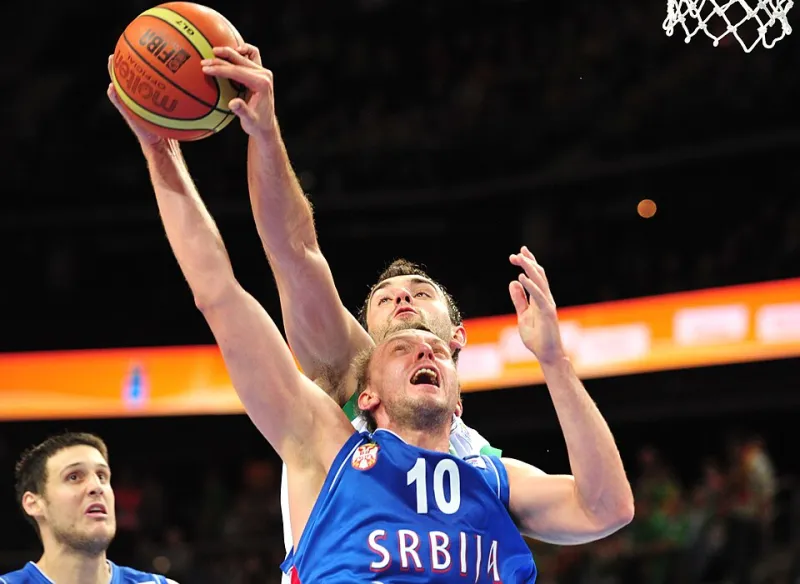
Photo: globalite, CC BY-SA 2.0, via Wikimedia Commons
Here's a fun party trick for your next hoops conversation: ask your buddy how many people live in Slovenia. Most American fans will guess way high. The answer is about 2.1 million — roughly the population of the Houston metro area, minus a suburb or two. And yet that little Alpine strip of a country won a FIBA EuroBasket in 2017, has produced an NBA MVP-caliber superstar, and treats the national team program like it's a religion with a practice facility.
Meanwhile, the United States — 330 million people, more hoops courts than gas stations — has looked genuinely mortal in FIBA qualifying windows, where rosters stitched together from G Leaguers and overseas vets sometimes stumble through games that matter way more to everyone else in the building.
So what gives? Why do countries you could drive across in an afternoon keep beating teams that draft from a talent pool the size of a mid-sized nation?
Continuity Is a Cheat Code
The biggest difference isn't talent. It's memory.
Slovenia's core players have been running with each other since they were teenagers on junior national teams. Goran Dragić, Luka Dončić, and their contemporaries didn't meet at a summer training camp — they grew up in the same system, ran the same sets, and learned each other's tendencies the way college roommates learn each other's sleep schedules. When they suit up for a FIBA window, they're not learning a system. They are the system.
Compare that to the American approach in qualifying windows, where the roster can turn over almost completely between tournaments. That's not a knock on the players — it's a structural choice. But FIBA basketball punishes unfamiliarity ruthlessly. The shorter three-point line, the tighter lane, the 40-minute game, the physicality that NBA refs whistle out of existence: all of it rewards teams that have drilled together for a decade.
The Pipeline Starts Before the Pipeline
In small countries, basketball development isn't a business — it's infrastructure. Clubs are tied to communities. A promising 12-year-old in Ljubljana or Kaunas gets funneled into a club system with real coaching, real competition, and a clear ladder to the senior national team. There's no ambiguity about the path because there isn't room for ambiguity. Everyone knows everyone.
That density matters. When your whole basketball ecosystem can fit in one gym, the good ideas travel fast. A drill that works for the U-16 team shows up on the senior squad by the next season. Coaches share film across clubs because they're rivals, sure, but they're also colleagues.
And here's the part that should make American development folks squirm: small nations can't rely on athleticism to paper over gaps. Slovenia can't out-leap anyone. So they out-think them. Footwork, spacing, passing, timing — the stuff that translates to any rulebook — gets hammered home early because it has to.
The Underdog With a Chip (and a Superstar)
There's also a cultural ingredient that doesn't show up on any spreadsheet. For a country of 2 million, every FIBA game is a national event. A EuroBasket semifinal isn't a Tuesday night game — it's a civic occasion. Players don't just represent a team; they represent the entire country's self-image on a stage that size.
That's a different kind of pressure, and the small nations wear it like armor. When Slovenia beat Spain for the 2017 EuroBasket title, it wasn't an upset to them. It was a referendum. You don't beat a team playing with that kind of conviction by having a deeper bench.
And when one of your own becomes a global superstar — as Luka has — the whole thing compounds. Every kid in the country now has proof that the path exists. The pipeline doesn't just produce players; it produces belief.
What America Could Learn (and Probably Won't)
To be clear: nobody's crying for USA Basketball. When the actual A-team shows up to the Olympics or the World Cup, the Americans are usually fine. The qualifying windows are where the system shows its seams, because the U.S. treats them as an obligation while every other nation treats them as the main event.
The fix isn't complicated, just inconvenient: pick a core, keep it together, let it marinate through multiple windows the way every other federation does. Build the continuity the small nations have by default. It's less glamorous than assembling an All-Star squad every few summers, but it's how you win the games that don't make ESPN's top 10.
Small countries don't beat superteams because of some magic dust. They do it because they've been building the same team for ten years while everyone else keeps starting over. Population is a resource. Continuity is a strategy. And in FIBA basketball, strategy eats resources for lunch.


