Three Strangers, One Qualifying Window: The Folks Who Actually Make FIBA Happen
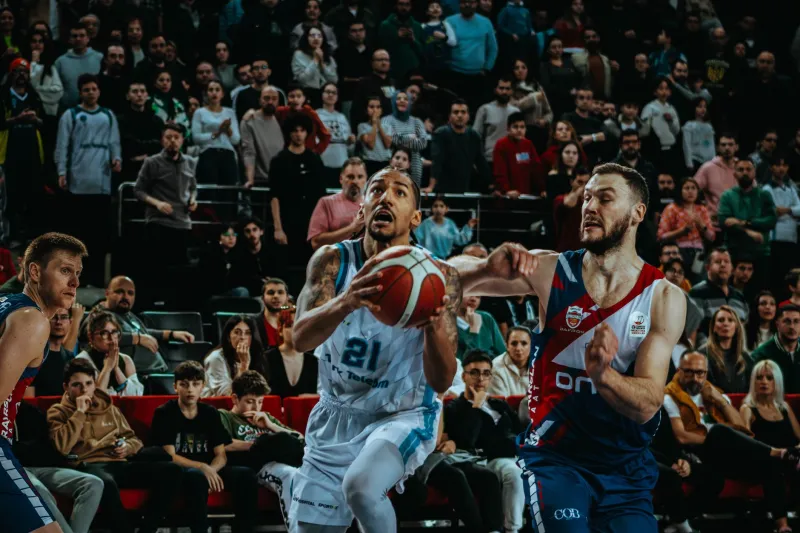
You know the drill. It's 2 a.m. on the East Coast, you've got the FIBA app open, and some qualifying window game from a city you couldn't find on a map is playing in front of maybe 3,000 people. The broadcast is a little fuzzy. The crowd mic picks up everything. And somehow, it's the best basketball content on your phone.
Here's what you don't see: the weeks of chaos that made that game possible. We spent a qualifying window embedded in a mid-sized European city — the kind of place that gets one shot at the world stage every four years — and the story wasn't the players. It was three locals who had nothing to do with basketball and everything to do with it.
The Bouncer: Eight Hours of Smiling
Marek works the door at a nightclub most weekends. During the window, he worked the arena entrance — 14-hour shifts, checking credentials with the same patience he brings to carding college kids.
"People think security is about saying no," he told me between waves of visiting fans. "Here, it's about saying yes to the right people, fast, in four languages."
He's not exaggerating. A FIBA qualifying window dumps referees from one continent, team delegations from another, and media credential holders who printed the wrong PDF into one lobby. Marek learned the FIBA credential system in a weekend. Nobody trained him. There was nobody to do the training — the local federation runs on volunteers like him.
When Team USA-style blowouts happen and the arena empties early, Marek's the one who notices the visiting team's bus driver is lost and walks him to the lot personally. That's not in his job description. It's just Tuesday.
The Shoe Guy: A Pop-Up Shop That Almost Wasn't
Two blocks from the arena, Dejan runs a sporting goods store his father opened in 1987. When the window came to town, he saw an opportunity: stock national team gear, extend hours, maybe catch some of the 2,000 visiting fans.
Then the shipment got stuck in customs.
What followed was 72 hours of phone calls that Dejan describes as "negotiating with a wall, politely, in Serbian." He ended up driving two hours to a distributor's warehouse, loading his own hatchback with whatever jerseys he could get, and selling them out of cardboard boxes on the sidewalk.
He didn't make money. He roughly broke even after the fuel and the rush shipping. When I asked why he bothered, he shrugged in a way that only Balkan shopkeepers can master: "The games are here once. You don't let the games be here and do nothing."
If you've ever wondered why qualifying window crowds look so good in team colors — it's guys like Dejan, eating the logistics so the atmosphere eats the broadcast.
The Baker: Feeding Two Teams Before Tip-Off
The most important stop on our tour was the least glamorous. Ana's bakery opens at 4:30 a.m. During the window, it became the unofficial catering annex for both visiting teams.
FIBA nutrition rules are strict about what athletes eat close to games, so Ana worked with each team's staff to build approved spreads — specific breads, low-sugar pastries, coffee strong enough to qualify as a performance enhancer. One team's nutritionist sent her a spreadsheet. She printed it and taped it to the register like a family recipe.
"The point guard from the visiting team, he comes in every morning," she said, laughing. "I'm not supposed to have favorites. I have favorites."
By the final game of the window, players from both squads were doing their pregame walk-ins past her shop. She had photos on the wall by the following Monday.
Why This Matters to You, the 2 A.M. Viewer
Here's the thing: none of this shows up in the box score. The final will read 78-71, 12 lead changes, and you'll scroll past it in six seconds. But that game existed because a bouncer learned a credential system, a shopkeeper drove two hours for jerseys, and a baker followed a nutrition spreadsheet like it was scripture.
FIBA qualifying windows aren't the NBA, where an arena operation has 200 full-time staff and a rehearsal schedule. They're a city volunteering itself into existence for one week. The production values on your stream are a little rough because the whole operation is held together by people doing jobs they've never done, for a sport they love, for free or close to it.
So next time you're up at 2 a.m. watching a window game from a town you've never heard of, take a second. Look at the arena staff in matching polos. Notice the packed fan zone out front. Someone in that city spent three weeks making your late-night viewing happen.
The basketball is global. But the hospitality? That's always local.